•  

Japan: Anna and Elsa Bring ‘Frozen’ Magic to Tokyo Disneyland Amid Snowfall

A cold air mass brought widespread snow to much of Japan on Sunday, February 8. At Tokyo Disneyland in Chiba Prefecture, Anna and Elsa from "Frozen" delighted guests by appearing amid snowfall, effectively turning the park into a real-life "Frozen Kingdom."

  •  

Japan: Tokyo Sees Significant Snow Accumulation Amid Widespread Winter Storm 7

A cold air mass brought widespread snow to much of Japan starting Saturday, February 7, prompting the Japan Meteorological Agency to issue warnings and advisories nationwide as heavy snow continued along the Sea of Japan coast. As of Sunday, over 3 cm of snow accumulation was reported in Tokyo, covering streets throughout the capital. This video shows the Tokyo Disney Resort area around Maihama Station.

  •  

Japan: Tokyo Sees Significant Snow Accumulation Amid Widespread Winter Storm 6

A cold air mass brought widespread snow to much of Japan starting Saturday, February 7, prompting the Japan Meteorological Agency to issue warnings and advisories nationwide as heavy snow continued along the Sea of Japan coast. As of Sunday, over 3 cm of snow accumulation was reported in Tokyo, covering streets throughout the capital.

  •  

Japan: Tokyo Sees Significant Snow Accumulation Amid Widespread Winter Storm 5

A cold air mass brought widespread snow to much of Japan starting Saturday, February 7, prompting the Japan Meteorological Agency to issue warnings and advisories nationwide as heavy snow continued along the Sea of Japan coast. As of Sunday, over 3 cm of snow accumulation was reported in Tokyo, covering streets throughout the capital.

  •  

Japan: Tokyo Sees Significant Snow Accumulation Amid Widespread Winter Storm 4

A cold air mass brought widespread snow to much of Japan starting Saturday, February 7, prompting the Japan Meteorological Agency to issue warnings and advisories nationwide as heavy snow continued along the Sea of Japan coast. As of Sunday, over 3 cm of snow accumulation was reported in Tokyo, covering streets throughout the capital.

  •  

Japan: Tokyo Sees Significant Snow Accumulation Amid Widespread Winter Storm 3

A cold air mass brought widespread snow to much of Japan starting Saturday, February 7, prompting the Japan Meteorological Agency to issue warnings and advisories nationwide as heavy snow continued along the Sea of Japan coast. As of Sunday, over 3 cm of snow accumulation was reported in Tokyo, covering streets throughout the capital.

  •  

China: Octopus Clings to Phone After Being Caught by Fisher in Fuzhou

In Fuzhou, Fujian, a video captured a man fishing when he unexpectedly caught an octopus with a phone stuck to one of its tentacles on September 28. The octopus refused to let go, wrapping its arms tightly around the device as if claiming it as its own.

  •  
Arctic Ocean Scientific Expedition

Arctic Ocean Scientific Expedition

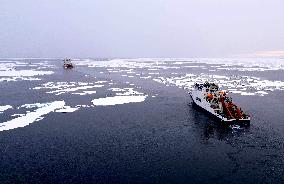
A drone photo taken on Aug. 5, 2025 shows China's research icebreaker Xuelong 2 breaking the ice to lead the way in the Arctic Ocean. China's research icebreaker Xuelong 2, or Snow Dragon 2, arrived in Shanghai on Friday, marking the completion of the country's hitherto largest Arctic Ocean scientific expedition. During the expedition, the Xuelong 2 and Jidi vessels completed comprehensive marine environment surveys and manned deep-sea diving support tasks in the Chukchi sea plateau, the Canada Basin and the central region of the Arctic Ocean. Photo by Xinhua/Liu Shiping/ABACAPRESS.COM

  •  
Arctic Ocean Scientific Expedition

Arctic Ocean Scientific Expedition

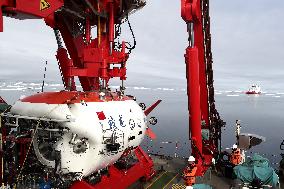
China's manned deep-sea submersible Jiaolong is about to leave its mothership Shenhai Yihao (DeepSea No. 1) in the Arctic Ocean, Aug. 6, 2025. China's research icebreaker Xuelong 2, or Snow Dragon 2, arrived in Shanghai on Friday, marking the completion of the country's hitherto largest Arctic Ocean scientific expedition. During the expedition, the Xuelong 2 and Jidi vessels completed comprehensive marine environment surveys and manned deep-sea diving support tasks in the Chukchi sea plateau, the Canada Basin and the central region of the Arctic Ocean. Photo by Xinhua/Liu Shiping/ABACAPRESS.COM

  •  
Arctic Ocean Scientific Expedition

Arctic Ocean Scientific Expedition

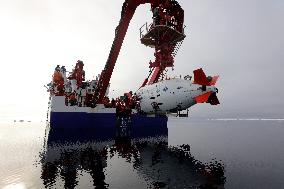
China's manned deep-sea submersible Jiaolong leaves its mothership Shenhai Yihao (DeepSea No. 1) and dives in the Arctic Ocean, Aug. 6, 2025. China's research icebreaker Xuelong 2, or Snow Dragon 2, arrived in Shanghai on Friday, marking the completion of the country's hitherto largest Arctic Ocean scientific expedition. During the expedition, the Xuelong 2 and Jidi vessels completed comprehensive marine environment surveys and manned deep-sea diving support tasks in the Chukchi sea plateau, the Canada Basin and the central region of the Arctic Ocean. Photo by Xinhua/Liu Shiping/ABACAPRESS.COM

  •  
Arctic Ocean Scientific Expedition

Arctic Ocean Scientific Expedition

China's manned deep-sea submersible Jiaolong is about to dive in the Arctic Ocean, Aug. 6, 2025. China's research icebreaker Xuelong 2, or Snow Dragon 2, arrived in Shanghai on Friday, marking the completion of the country's hitherto largest Arctic Ocean scientific expedition. During the expedition, the Xuelong 2 and Jidi vessels completed comprehensive marine environment surveys and manned deep-sea diving support tasks in the Chukchi sea plateau, the Canada Basin and the central region of the Arctic Ocean. Photo by Xinhua/Liu Shiping/ABACAPRESS.COM

  •  
Arctic Ocean Scientific Expedition

Arctic Ocean Scientific Expedition

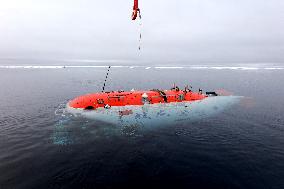
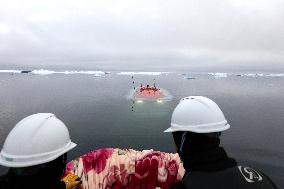
This photo taken on Aug. 6, 2025 shows China's manned deep-sea submersible Jiaolong returned to the surface from the bottom of the sea in the Arctic Ocean. China's research icebreaker Xuelong 2, or Snow Dragon 2, arrived in Shanghai on Friday, marking the completion of the country's hitherto largest Arctic Ocean scientific expedition. During the expedition, the Xuelong 2 and Jidi vessels completed comprehensive marine environment surveys and manned deep-sea diving support tasks in the Chukchi sea plateau, the Canada Basin and the central region of the Arctic Ocean. Photo by Xinhua/Liu Shiping/ABACAPRESS.COM

  •  
Arctic Ocean Scientific Expedition

Arctic Ocean Scientific Expedition

This photo taken on Aug. 6, 2025 shows China's manned deep-sea submersible Jiaolong diving in the Arctic Ocean. China's research icebreaker Xuelong 2, or Snow Dragon 2, arrived in Shanghai on Friday, marking the completion of the country's hitherto largest Arctic Ocean scientific expedition. During the expedition, the Xuelong 2 and Jidi vessels completed comprehensive marine environment surveys and manned deep-sea diving support tasks in the Chukchi sea plateau, the Canada Basin and the central region of the Arctic Ocean. Photo by Xinhua/Liu Shiping/ABACAPRESS.COM

  •  

Iceland: Volcano On Reykjanes Peninsula Erupts For 7th Time Since Last December 5

A volcano in southwestern Iceland erupted on Wednesday night, November 20, marking its seventh eruption since last December. The eruption occurred on the Reykjanes Peninsula, sending molten lava flowing toward the Blue Lagoon spa, a major tourist attraction.

  •  
NORWAY-SVALBARD-CHINA-ARCTIC EXPEDITION

NORWAY-SVALBARD-CHINA-ARCTIC EXPEDITION

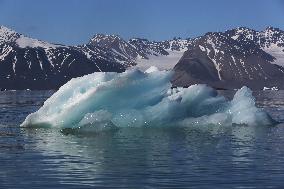
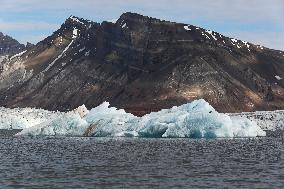
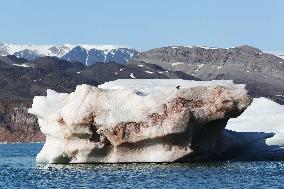
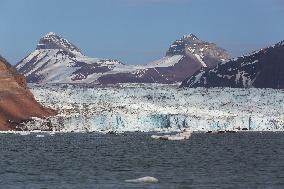
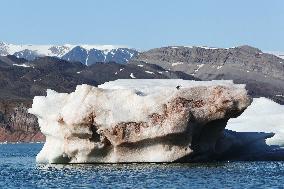
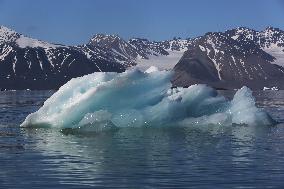
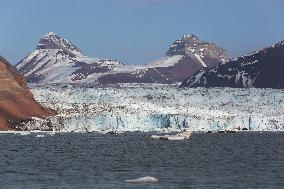
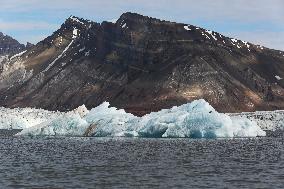
(240627) -- NY-ALESUND, June 27, 2024 Photo by Xinhua/ABACAPRESS.COM) -- This photo taken on June 22, 2024 shows an iceberg in Svalbard, Norway. Based in China's Arctic Yellow River Station, Chinese scientists research on two glaciers in Ny-Alesund of Norway's Arctic Svalbard archipelago to reveal the rate of glacier retreat around the Yellow River Station and its response to global warming, providing an important basis for predicting sea level rise and the impact of climate patterns in the future. Photo by Xinhua/ABACAPRESS.COM/Zhao Dingzhe)

  •  
NORWAY-SVALBARD-CHINA-ARCTIC EXPEDITION

NORWAY-SVALBARD-CHINA-ARCTIC EXPEDITION

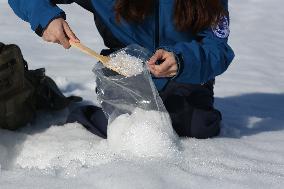
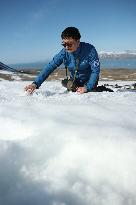
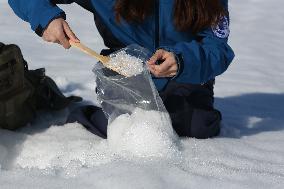
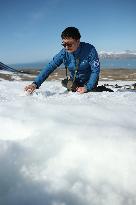
(240627) -- NY-ALESUND, June 27, 2024 Photo by Xinhua/ABACAPRESS.COM) -- Wu Xiaohan, a member of the Chinese Arctic expedition team, collects samples on the Austre Lovenbreen glacier in Svalbard, Norway, June 22, 2024. Based in China's Arctic Yellow River Station, Chinese scientists research on two glaciers in Ny-Alesund of Norway's Arctic Svalbard archipelago to reveal the rate of glacier retreat around the Yellow River Station and its response to global warming, providing an important basis for predicting sea level rise and the impact of climate patterns in the future. Photo by Xinhua/ABACAPRESS.COM/Zhao Dingzhe)

  •  
NORWAY-SVALBARD-CHINA-ARCTIC EXPEDITION

NORWAY-SVALBARD-CHINA-ARCTIC EXPEDITION

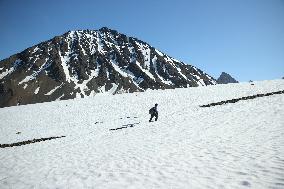
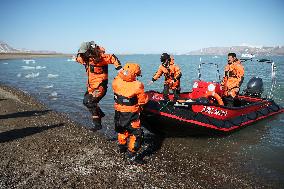
(240627) -- NY-ALESUND, June 27, 2024 Photo by Xinhua/ABACAPRESS.COM) -- Members of the Chinese Arctic expedition team head for the Austre Lovenbreen glacier in Svalbard, Norway, June 22, 2024. Based in China's Arctic Yellow River Station, Chinese scientists research on two glaciers in Ny-Alesund of Norway's Arctic Svalbard archipelago to reveal the rate of glacier retreat around the Yellow River Station and its response to global warming, providing an important basis for predicting sea level rise and the impact of climate patterns in the future. Photo by Xinhua/ABACAPRESS.COM/Zhao Dingzhe)

  •  
NORWAY-SVALBARD-CHINA-ARCTIC EXPEDITION

NORWAY-SVALBARD-CHINA-ARCTIC EXPEDITION

(240627) -- NY-ALESUND, June 27, 2024 Photo by Xinhua/ABACAPRESS.COM) -- This photo taken on June 22, 2024 shows an iceberg in Svalbard, Norway. Based in China's Arctic Yellow River Station, Chinese scientists research on two glaciers in Ny-Alesund of Norway's Arctic Svalbard archipelago to reveal the rate of glacier retreat around the Yellow River Station and its response to global warming, providing an important basis for predicting sea level rise and the impact of climate patterns in the future. Photo by Xinhua/ABACAPRESS.COM/Zhao Dingzhe)

  •  
NORWAY-SVALBARD-CHINA-ARCTIC EXPEDITION

NORWAY-SVALBARD-CHINA-ARCTIC EXPEDITION

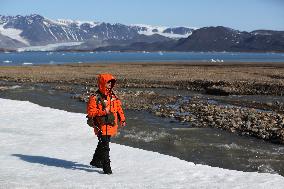
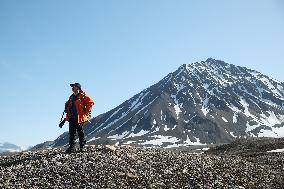
(240627) -- NY-ALESUND, June 27, 2024 Photo by Xinhua/ABACAPRESS.COM) -- Hu Zhengyi, a member of the Chinese Arctic expedition team, heads for the Austre Lovenbreen glacier in Svalbard, Norway, June 22, 2024. Based in China's Arctic Yellow River Station, Chinese scientists research on two glaciers in Ny-Alesund of Norway's Arctic Svalbard archipelago to reveal the rate of glacier retreat around the Yellow River Station and its response to global warming, providing an important basis for predicting sea level rise and the impact of climate patterns in the future. Photo by Xinhua/ABACAPRESS.COM/Zhao Dingzhe)

  •  
NORWAY-SVALBARD-CHINA-ARCTIC EXPEDITION

NORWAY-SVALBARD-CHINA-ARCTIC EXPEDITION

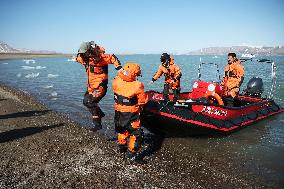
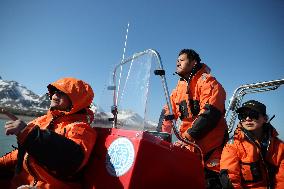
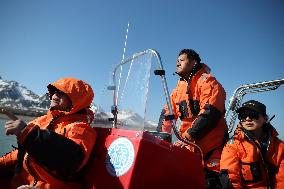
(240627) -- NY-ALESUND, June 27, 2024 Photo by Xinhua/ABACAPRESS.COM) -- Members of the Chinese Arctic expedition team take a boat out for sampling on the Austre Lovenbreen glacier in Svalbard, Norway, June 22, 2024. Based in China's Arctic Yellow River Station, Chinese scientists research on two glaciers in Ny-Alesund of Norway's Arctic Svalbard archipelago to reveal the rate of glacier retreat around the Yellow River Station and its response to global warming, providing an important basis for predicting sea level rise and the impact of climate patterns in the future. Photo by Xinhua/ABACAPRESS.COM/Zhao Dingzhe)

  •  
NORWAY-SVALBARD-CHINA-ARCTIC EXPEDITION

NORWAY-SVALBARD-CHINA-ARCTIC EXPEDITION

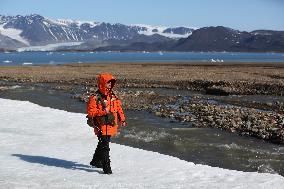
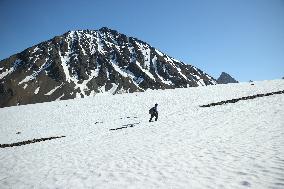
(240627) -- NY-ALESUND, June 27, 2024 Photo by Xinhua/ABACAPRESS.COM) -- Hu Zhengyi, a member of the Chinese Arctic expedition team, walks on the Austre Lovenbreen glacier for sampling in Svalbard, Norway, June 22, 2024. Based in China's Arctic Yellow River Station, Chinese scientists research on two glaciers in Ny-Alesund of Norway's Arctic Svalbard archipelago to reveal the rate of glacier retreat around the Yellow River Station and its response to global warming, providing an important basis for predicting sea level rise and the impact of climate patterns in the future. Photo by Xinhua/ABACAPRESS.COM/Zhao Dingzhe)

  •  
NORWAY-SVALBARD-CHINA-ARCTIC EXPEDITION

NORWAY-SVALBARD-CHINA-ARCTIC EXPEDITION

(240627) -- NY-ALESUND, June 27, 2024 Photo by Xinhua/ABACAPRESS.COM) -- Members of the Chinese Arctic expedition team take a boat out for sampling on the Austre Lovenbreen glacier in Svalbard, Norway, June 22, 2024. Based in China's Arctic Yellow River Station, Chinese scientists research on two glaciers in Ny-Alesund of Norway's Arctic Svalbard archipelago to reveal the rate of glacier retreat around the Yellow River Station and its response to global warming, providing an important basis for predicting sea level rise and the impact of climate patterns in the future. Photo by Xinhua/ABACAPRESS.COM/Zhao Dingzhe)

  •  
NORWAY-SVALBARD-CHINA-ARCTIC EXPEDITION

NORWAY-SVALBARD-CHINA-ARCTIC EXPEDITION

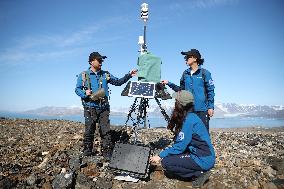
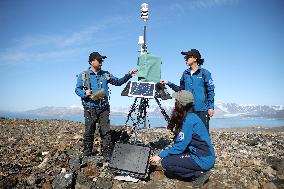
(240627) -- NY-ALESUND, June 27, 2024 Photo by Xinhua/ABACAPRESS.COM) -- Members of the Chinese Arctic expedition team check the equipment on their way to the Austre Lovenbreen glacier in Svalbard, Norway, June 22, 2024. Based in China's Arctic Yellow River Station, Chinese scientists research on two glaciers in Ny-Alesund of Norway's Arctic Svalbard archipelago to reveal the rate of glacier retreat around the Yellow River Station and its response to global warming, providing an important basis for predicting sea level rise and the impact of climate patterns in the future. Photo by Xinhua/ABACAPRESS.COM/Zhao Dingzhe)

  •  
NORWAY-SVALBARD-CHINA-ARCTIC EXPEDITION

NORWAY-SVALBARD-CHINA-ARCTIC EXPEDITION

(240627) -- NY-ALESUND, June 27, 2024 Photo by Xinhua/ABACAPRESS.COM) -- Hu Zhengyi, a member of the Chinese Arctic expedition team, collects samples on the Austre Lovenbreen glacier in Svalbard, Norway, June 22, 2024. Based in China's Arctic Yellow River Station, Chinese scientists research on two glaciers in Ny-Alesund of Norway's Arctic Svalbard archipelago to reveal the rate of glacier retreat around the Yellow River Station and its response to global warming, providing an important basis for predicting sea level rise and the impact of climate patterns in the future. Photo by Xinhua/ABACAPRESS.COM/Zhao Dingzhe)

  •  
NORWAY-SVALBARD-CHINA-ARCTIC EXPEDITION

NORWAY-SVALBARD-CHINA-ARCTIC EXPEDITION

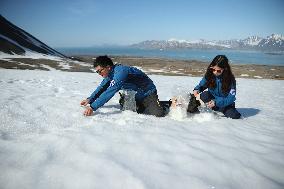
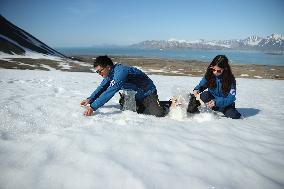
(240627) -- NY-ALESUND, June 27, 2024 Photo by Xinhua/ABACAPRESS.COM) -- Members of the Chinese Arctic expedition team collect samples on the Austre Lovenbreen glacier in Svalbard, Norway, June 22, 2024. Based in China's Arctic Yellow River Station, Chinese scientists research on two glaciers in Ny-Alesund of Norway's Arctic Svalbard archipelago to reveal the rate of glacier retreat around the Yellow River Station and its response to global warming, providing an important basis for predicting sea level rise and the impact of climate patterns in the future. Photo by Xinhua/ABACAPRESS.COM/Zhao Dingzhe)

  •  
NORWAY-SVALBARD-CHINA-ARCTIC EXPEDITION

NORWAY-SVALBARD-CHINA-ARCTIC EXPEDITION

(240627) -- NY-ALESUND, June 27, 2024 Photo by Xinhua/ABACAPRESS.COM) -- This photo taken on June 22, 2024 shows an iceberg in Svalbard, Norway. Based in China's Arctic Yellow River Station, Chinese scientists research on two glaciers in Ny-Alesund of Norway's Arctic Svalbard archipelago to reveal the rate of glacier retreat around the Yellow River Station and its response to global warming, providing an important basis for predicting sea level rise and the impact of climate patterns in the future. Photo by Xinhua/ABACAPRESS.COM/Zhao Dingzhe)

  •  
NORWAY-SVALBARD-CHINA-ARCTIC EXPEDITION

NORWAY-SVALBARD-CHINA-ARCTIC EXPEDITION

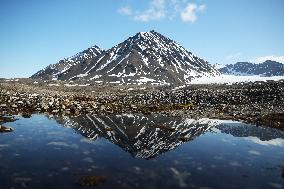
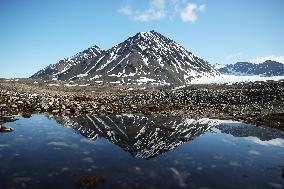
(240627) -- NY-ALESUND, June 27, 2024 Photo by Xinhua/ABACAPRESS.COM) -- This photo taken on June 22, 2024 shows snow-covered mountains near the Austre Lovenbreen glacier in Svalbard, Norway. Based in China's Arctic Yellow River Station, Chinese scientists research on two glaciers in Ny-Alesund of Norway's Arctic Svalbard archipelago to reveal the rate of glacier retreat around the Yellow River Station and its response to global warming, providing an important basis for predicting sea level rise and the impact of climate patterns in the future. Photo by Xinhua/ABACAPRESS.COM/Zhao Dingzhe)

  •  
NORWAY-SVALBARD-CHINA-ARCTIC EXPEDITION

NORWAY-SVALBARD-CHINA-ARCTIC EXPEDITION

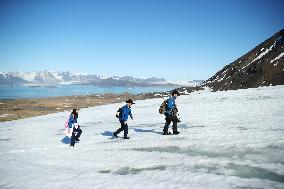
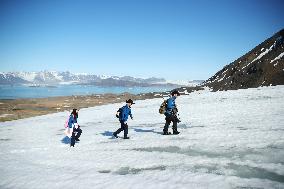
(240627) -- NY-ALESUND, June 27, 2024 Photo by Xinhua/ABACAPRESS.COM) -- Members of the Chinese Arctic expedition team walk on the Austre Lovenbreen glacier for sampling in Svalbard, Norway, June 22, 2024. Based in China's Arctic Yellow River Station, Chinese scientists research on two glaciers in Ny-Alesund of Norway's Arctic Svalbard archipelago to reveal the rate of glacier retreat around the Yellow River Station and its response to global warming, providing an important basis for predicting sea level rise and the impact of climate patterns in the future. Photo by Xinhua/ABACAPRESS.COM/Zhao Dingzhe)

  •  
NORWAY-SVALBARD-CHINA-ARCTIC EXPEDITION

NORWAY-SVALBARD-CHINA-ARCTIC EXPEDITION

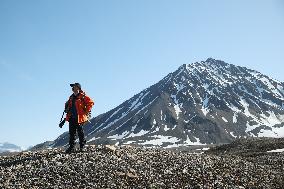
(240627) -- NY-ALESUND, June 27, 2024 Photo by Xinhua/ABACAPRESS.COM) -- Hu Zhengyi, a member of the Chinese Arctic expedition team, rests on his way to the Austre Lovenbreen glacier in Svalbard, Norway, June 22, 2024. Based in China's Arctic Yellow River Station, Chinese scientists research on two glaciers in Ny-Alesund of Norway's Arctic Svalbard archipelago to reveal the rate of glacier retreat around the Yellow River Station and its response to global warming, providing an important basis for predicting sea level rise and the impact of climate patterns in the future. Photo by Xinhua/ABACAPRESS.COM/Zhao Dingzhe)

  •  
NORWAY-SVALBARD-CHINA-ARCTIC EXPEDITION

NORWAY-SVALBARD-CHINA-ARCTIC EXPEDITION

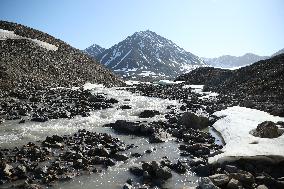
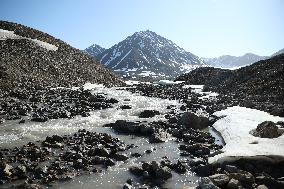
(240627) -- NY-ALESUND, June 27, 2024 Photo by Xinhua/ABACAPRESS.COM) -- This photo taken on June 22, 2024 shows a view of melting glacier in Svalbard, Norway. Based in China's Arctic Yellow River Station, Chinese scientists research on two glaciers in Ny-Alesund of Norway's Arctic Svalbard archipelago to reveal the rate of glacier retreat around the Yellow River Station and its response to global warming, providing an important basis for predicting sea level rise and the impact of climate patterns in the future. Photo by Xinhua/ABACAPRESS.COM/Zhao Dingzhe)

  •  
NORWAY-SVALBARD-CHINA-ARCTIC EXPEDITION

NORWAY-SVALBARD-CHINA-ARCTIC EXPEDITION

(240627) -- NY-ALESUND, June 27, 2024 (Xinhua) -- Members of the Chinese Arctic expedition team take a boat out for sampling on the Austre Lovenbreen glacier in Svalbard, Norway, June 22, 2024. Based in China's Arctic Yellow River Station, Chinese scientists research on two glaciers in Ny-Alesund of Norway's Arctic Svalbard archipelago to reveal the rate of glacier retreat around the Yellow River Station and its response to global warming, providing an important basis for predicting sea level rise and the impact of climate patterns in the future. (Xinhua/Zhao Dingzhe)

  •  
NORWAY-SVALBARD-CHINA-ARCTIC EXPEDITION

NORWAY-SVALBARD-CHINA-ARCTIC EXPEDITION

(240627) -- NY-ALESUND, June 27, 2024 (Xinhua) -- Members of the Chinese Arctic expedition team check the equipment on their way to the Austre Lovenbreen glacier in Svalbard, Norway, June 22, 2024. Based in China's Arctic Yellow River Station, Chinese scientists research on two glaciers in Ny-Alesund of Norway's Arctic Svalbard archipelago to reveal the rate of glacier retreat around the Yellow River Station and its response to global warming, providing an important basis for predicting sea level rise and the impact of climate patterns in the future. (Xinhua/Zhao Dingzhe)

  •  
NORWAY-SVALBARD-CHINA-ARCTIC EXPEDITION

NORWAY-SVALBARD-CHINA-ARCTIC EXPEDITION

(240627) -- NY-ALESUND, June 27, 2024 (Xinhua) -- Members of the Chinese Arctic expedition team walk on the Austre Lovenbreen glacier for sampling in Svalbard, Norway, June 22, 2024. Based in China's Arctic Yellow River Station, Chinese scientists research on two glaciers in Ny-Alesund of Norway's Arctic Svalbard archipelago to reveal the rate of glacier retreat around the Yellow River Station and its response to global warming, providing an important basis for predicting sea level rise and the impact of climate patterns in the future. (Xinhua/Zhao Dingzhe)

  •  
NORWAY-SVALBARD-CHINA-ARCTIC EXPEDITION

NORWAY-SVALBARD-CHINA-ARCTIC EXPEDITION

(240627) -- NY-ALESUND, June 27, 2024 (Xinhua) -- This photo taken on June 22, 2024 shows an iceberg in Svalbard, Norway. Based in China's Arctic Yellow River Station, Chinese scientists research on two glaciers in Ny-Alesund of Norway's Arctic Svalbard archipelago to reveal the rate of glacier retreat around the Yellow River Station and its response to global warming, providing an important basis for predicting sea level rise and the impact of climate patterns in the future. (Xinhua/Zhao Dingzhe)

  •  
NORWAY-SVALBARD-CHINA-ARCTIC EXPEDITION

NORWAY-SVALBARD-CHINA-ARCTIC EXPEDITION

(240627) -- NY-ALESUND, June 27, 2024 (Xinhua) -- This photo taken on June 22, 2024 shows snow-covered mountains near the Austre Lovenbreen glacier in Svalbard, Norway. Based in China's Arctic Yellow River Station, Chinese scientists research on two glaciers in Ny-Alesund of Norway's Arctic Svalbard archipelago to reveal the rate of glacier retreat around the Yellow River Station and its response to global warming, providing an important basis for predicting sea level rise and the impact of climate patterns in the future. (Xinhua/Zhao Dingzhe)

  •  
NORWAY-SVALBARD-CHINA-ARCTIC EXPEDITION

NORWAY-SVALBARD-CHINA-ARCTIC EXPEDITION

(240627) -- NY-ALESUND, June 27, 2024 (Xinhua) -- Hu Zhengyi, a member of the Chinese Arctic expedition team, heads for the Austre Lovenbreen glacier in Svalbard, Norway, June 22, 2024. Based in China's Arctic Yellow River Station, Chinese scientists research on two glaciers in Ny-Alesund of Norway's Arctic Svalbard archipelago to reveal the rate of glacier retreat around the Yellow River Station and its response to global warming, providing an important basis for predicting sea level rise and the impact of climate patterns in the future. (Xinhua/Zhao Dingzhe)

  •  
NORWAY-SVALBARD-CHINA-ARCTIC EXPEDITION

NORWAY-SVALBARD-CHINA-ARCTIC EXPEDITION

(240627) -- NY-ALESUND, June 27, 2024 (Xinhua) -- Wu Xiaohan, a member of the Chinese Arctic expedition team, collects samples on the Austre Lovenbreen glacier in Svalbard, Norway, June 22, 2024. Based in China's Arctic Yellow River Station, Chinese scientists research on two glaciers in Ny-Alesund of Norway's Arctic Svalbard archipelago to reveal the rate of glacier retreat around the Yellow River Station and its response to global warming, providing an important basis for predicting sea level rise and the impact of climate patterns in the future. (Xinhua/Zhao Dingzhe)

  •  
NORWAY-SVALBARD-CHINA-ARCTIC EXPEDITION

NORWAY-SVALBARD-CHINA-ARCTIC EXPEDITION

(240627) -- NY-ALESUND, June 27, 2024 (Xinhua) -- Members of the Chinese Arctic expedition team head for the Austre Lovenbreen glacier in Svalbard, Norway, June 22, 2024. Based in China's Arctic Yellow River Station, Chinese scientists research on two glaciers in Ny-Alesund of Norway's Arctic Svalbard archipelago to reveal the rate of glacier retreat around the Yellow River Station and its response to global warming, providing an important basis for predicting sea level rise and the impact of climate patterns in the future. (Xinhua/Zhao Dingzhe)

  •  
NORWAY-SVALBARD-CHINA-ARCTIC EXPEDITION

NORWAY-SVALBARD-CHINA-ARCTIC EXPEDITION

(240627) -- NY-ALESUND, June 27, 2024 (Xinhua) -- This photo taken on June 22, 2024 shows an iceberg in Svalbard, Norway. Based in China's Arctic Yellow River Station, Chinese scientists research on two glaciers in Ny-Alesund of Norway's Arctic Svalbard archipelago to reveal the rate of glacier retreat around the Yellow River Station and its response to global warming, providing an important basis for predicting sea level rise and the impact of climate patterns in the future. (Xinhua/Zhao Dingzhe)

  •  
NORWAY-SVALBARD-CHINA-ARCTIC EXPEDITION

NORWAY-SVALBARD-CHINA-ARCTIC EXPEDITION

(240627) -- NY-ALESUND, June 27, 2024 (Xinhua) -- Hu Zhengyi, a member of the Chinese Arctic expedition team, walks on the Austre Lovenbreen glacier for sampling in Svalbard, Norway, June 22, 2024. Based in China's Arctic Yellow River Station, Chinese scientists research on two glaciers in Ny-Alesund of Norway's Arctic Svalbard archipelago to reveal the rate of glacier retreat around the Yellow River Station and its response to global warming, providing an important basis for predicting sea level rise and the impact of climate patterns in the future. (Xinhua/Zhao Dingzhe)

  •  
NORWAY-SVALBARD-CHINA-ARCTIC EXPEDITION

NORWAY-SVALBARD-CHINA-ARCTIC EXPEDITION

(240627) -- NY-ALESUND, June 27, 2024 (Xinhua) -- Members of the Chinese Arctic expedition team collect samples on the Austre Lovenbreen glacier in Svalbard, Norway, June 22, 2024. Based in China's Arctic Yellow River Station, Chinese scientists research on two glaciers in Ny-Alesund of Norway's Arctic Svalbard archipelago to reveal the rate of glacier retreat around the Yellow River Station and its response to global warming, providing an important basis for predicting sea level rise and the impact of climate patterns in the future. (Xinhua/Zhao Dingzhe)

  •  
NORWAY-SVALBARD-CHINA-ARCTIC EXPEDITION

NORWAY-SVALBARD-CHINA-ARCTIC EXPEDITION

(240627) -- NY-ALESUND, June 27, 2024 (Xinhua) -- Members of the Chinese Arctic expedition team take a boat out for sampling on the Austre Lovenbreen glacier in Svalbard, Norway, June 22, 2024. Based in China's Arctic Yellow River Station, Chinese scientists research on two glaciers in Ny-Alesund of Norway's Arctic Svalbard archipelago to reveal the rate of glacier retreat around the Yellow River Station and its response to global warming, providing an important basis for predicting sea level rise and the impact of climate patterns in the future. (Xinhua/Zhao Dingzhe)

  •  
NORWAY-SVALBARD-CHINA-ARCTIC EXPEDITION

NORWAY-SVALBARD-CHINA-ARCTIC EXPEDITION

(240627) -- NY-ALESUND, June 27, 2024 (Xinhua) -- This photo taken on June 22, 2024 shows a view of melting glacier in Svalbard, Norway. Based in China's Arctic Yellow River Station, Chinese scientists research on two glaciers in Ny-Alesund of Norway's Arctic Svalbard archipelago to reveal the rate of glacier retreat around the Yellow River Station and its response to global warming, providing an important basis for predicting sea level rise and the impact of climate patterns in the future. (Xinhua/Zhao Dingzhe)

  •  
NORWAY-SVALBARD-CHINA-ARCTIC EXPEDITION

NORWAY-SVALBARD-CHINA-ARCTIC EXPEDITION

(240627) -- NY-ALESUND, June 27, 2024 (Xinhua) -- This photo taken on June 22, 2024 shows an iceberg in Svalbard, Norway. Based in China's Arctic Yellow River Station, Chinese scientists research on two glaciers in Ny-Alesund of Norway's Arctic Svalbard archipelago to reveal the rate of glacier retreat around the Yellow River Station and its response to global warming, providing an important basis for predicting sea level rise and the impact of climate patterns in the future. (Xinhua/Zhao Dingzhe)

  •  
NORWAY-SVALBARD-CHINA-ARCTIC EXPEDITION

NORWAY-SVALBARD-CHINA-ARCTIC EXPEDITION

(240627) -- NY-ALESUND, June 27, 2024 (Xinhua) -- Hu Zhengyi, a member of the Chinese Arctic expedition team, collects samples on the Austre Lovenbreen glacier in Svalbard, Norway, June 22, 2024. Based in China's Arctic Yellow River Station, Chinese scientists research on two glaciers in Ny-Alesund of Norway's Arctic Svalbard archipelago to reveal the rate of glacier retreat around the Yellow River Station and its response to global warming, providing an important basis for predicting sea level rise and the impact of climate patterns in the future. (Xinhua/Zhao Dingzhe)

  •  
NORWAY-SVALBARD-CHINA-ARCTIC EXPEDITION

NORWAY-SVALBARD-CHINA-ARCTIC EXPEDITION

(240627) -- NY-ALESUND, June 27, 2024 (Xinhua) -- Hu Zhengyi, a member of the Chinese Arctic expedition team, rests on his way to the Austre Lovenbreen glacier in Svalbard, Norway, June 22, 2024. Based in China's Arctic Yellow River Station, Chinese scientists research on two glaciers in Ny-Alesund of Norway's Arctic Svalbard archipelago to reveal the rate of glacier retreat around the Yellow River Station and its response to global warming, providing an important basis for predicting sea level rise and the impact of climate patterns in the future. (Xinhua/Zhao Dingzhe)

  •  
NORWAY-NY-ALESUND-YELLOW RIVER STATION-CHINESE RESEARCHERS

NORWAY-NY-ALESUND-YELLOW RIVER STATION-CHINESE RESEARCHERS

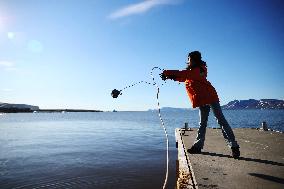
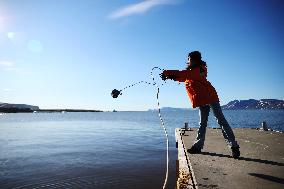
(240626) -- NY-ALESUND, June 26, 2024 Photo by Xinhua/ABACAPRESS.COM) -- Wu Xiaohan, a member of the Chinese Arctic expedition team, takes a sample of sea water in Ny-Alesund, Svalbard, Norway, June 21, 2024. Situated at 79 degrees north latitude in the northwestern region of Spitsbergen, the largest island in Norway's Arctic Svalbard archipelago, Ny-Alesund is the world's northernmost permanent settlement. Once a thriving coal mining town, Ny-Alesund now buzzes with the activities of polar researchers. Since the Yellow River Station's inception in 2004, China has established a significant presence in this scientific sanctuary, carrying out a range of observations and investigations in glaciology, terrestrial ecology, marine ecology, space physics, and other fields. By the end of 2023, the Yellow River Station had supported more than 250 scientific research projects and hosted over 660 researchers. As China's first Arctic research station, it has witnessed not only the development of China's polar research ef

  •  
NORWAY-NY-ALESUND-YELLOW RIVER STATION-CHINESE RESEARCHERS

NORWAY-NY-ALESUND-YELLOW RIVER STATION-CHINESE RESEARCHERS

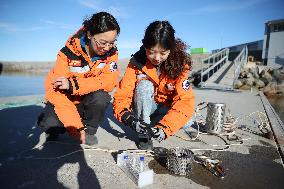
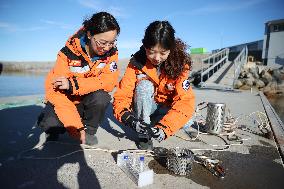
(240626) -- NY-ALESUND, June 26, 2024 Photo by Xinhua/ABACAPRESS.COM) -- Members of the Chinese Arctic expedition team Zhao Hongying (L) and Wu Xiaohan take samples of sea water in Ny-Alesund, Svalbard, Norway, June 21, 2024. Situated at 79 degrees north latitude in the northwestern region of Spitsbergen, the largest island in Norway's Arctic Svalbard archipelago, Ny-Alesund is the world's northernmost permanent settlement. Once a thriving coal mining town, Ny-Alesund now buzzes with the activities of polar researchers. Since the Yellow River Station's inception in 2004, China has established a significant presence in this scientific sanctuary, carrying out a range of observations and investigations in glaciology, terrestrial ecology, marine ecology, space physics, and other fields. By the end of 2023, the Yellow River Station had supported more than 250 scientific research projects and hosted over 660 researchers. As China's first Arctic research station, it has witnessed not only the development of China's

  •  
NORWAY-NY-ALESUND-YELLOW RIVER STATION-CHINESE RESEARCHERS

NORWAY-NY-ALESUND-YELLOW RIVER STATION-CHINESE RESEARCHERS

(240626) -- NY-ALESUND, June 26, 2024 (Xinhua) -- Wu Xiaohan, a member of the Chinese Arctic expedition team, takes a sample of sea water in Ny-Alesund, Svalbard, Norway, June 21, 2024. Situated at 79 degrees north latitude in the northwestern region of Spitsbergen, the largest island in Norway's Arctic Svalbard archipelago, Ny-Alesund is the world's northernmost permanent settlement. Once a thriving coal mining town, Ny-Alesund now buzzes with the activities of polar researchers. Since the Yellow River Station's inception in 2004, China has established a significant presence in this scientific sanctuary, carrying out a range of observations and investigations in glaciology, terrestrial ecology, marine ecology, space physics, and other fields. By the end of 2023, the Yellow River Station had supported more than 250 scientific research projects and hosted over 660 researchers. As China's first Arctic research station, it has witnessed not only the development of China's polar research efforts but also

  •  
NORWAY-NY-ALESUND-YELLOW RIVER STATION-CHINESE RESEARCHERS

NORWAY-NY-ALESUND-YELLOW RIVER STATION-CHINESE RESEARCHERS

(240626) -- NY-ALESUND, June 26, 2024 (Xinhua) -- Members of the Chinese Arctic expedition team Zhao Hongying (L) and Wu Xiaohan take samples of sea water in Ny-Alesund, Svalbard, Norway, June 21, 2024. Situated at 79 degrees north latitude in the northwestern region of Spitsbergen, the largest island in Norway's Arctic Svalbard archipelago, Ny-Alesund is the world's northernmost permanent settlement. Once a thriving coal mining town, Ny-Alesund now buzzes with the activities of polar researchers. Since the Yellow River Station's inception in 2004, China has established a significant presence in this scientific sanctuary, carrying out a range of observations and investigations in glaciology, terrestrial ecology, marine ecology, space physics, and other fields. By the end of 2023, the Yellow River Station had supported more than 250 scientific research projects and hosted over 660 researchers. As China's first Arctic research station, it has witnessed not only the development of China's polar research

  • Main
  • Top
  • Editorial
  • Creative
  • About Us
  • About ILG
  • Terms of use
  • Company
  • BEHIND
  • Price List
  • Single Plan
  • Monthly Plan
  • Services
  • Shooting
  • Rights Clearance
  • Support
  • FAQ
  • How To Buy
  • Contact Us
  • Become a Partner

© KYODO NEWS IMAGES INC

All Rights Reserved.

  • Editorial
  • Olympics
  • News
  • Sports
  • Japan
  • Tech
  • Royal
  • Disaster
  • NorthKorea
  • Old Japan
  • SNS
  • Creative
  • Food
  • Japan
  • Landscape
  • Animal
  • Popular
  • #Ukraine
  • #Russia
  • #coronavirus
  • #N. Korea
  • #Thailand
  • #China
  • #Ukraine
  • #Russia
  • #coronavirus
  • #N. Korea
  • #Thailand
  • #China
  • Food
  • Japan
  • Landscape
  • Animal
  • Olympics
  • News
  • Sports
  • Japan
  • Tech
  • Royal
  • Disaster
  • NorthKorea
  • Old Japan
  • SNS